
FalconPoint Inspections LLC
Quick Summary
Foundation problems usually show up as small, scattered signs: sticking doors, cracks in walls, sloping floors, and gaps at trim lines. Walk each room in the same order with a level, flashlight, and tape measure, logging dates, locations, and crack widths. Patterns across rooms and changes over time matter most.
- Walk every room in the same order each visit so notes can be compared.
- Cracks under about 1/16 inch that stay unchanged are often cosmetic.
- Cracks wider than about 1/4 inch, or ones that widen, warrant professional assessment.
- Rule out leaks, drainage, and worn hardware before blaming the foundation.
- A walkthrough shows signs worth investigating but cannot confirm a structural problem.
Table of Contents
- Start With a Room-by-Room Walkthrough
- Early Signs of Foundation Problems to Watch For
- Reading Cracks: Foundation Problems Pictures and Patterns
- Telling Foundation Problems Apart From Normal Settling
- Deciding When to Walk Away From Foundation Issues
- Frequently Asked Questions
Start With a Room-by-Room Walkthrough
Foundation problems rarely announce themselves with a single dramatic event. More often, they show up as small, scattered signs that are easy to dismiss one at a time.
Work through the home in the same order each time: front door, main living areas, bedrooms, then basement or crawl space. Carry a level, flashlight, tape measure, and phone for photos. Note what you see and where.
The Inspection Kit and What Each Tool Is For
You do not need specialty equipment for a useful first pass. A basic kit covers most of what a homeowner can observe:
- A 2-foot or 4-foot spirit level, set it on floors, window sills, and countertops to check whether a surface is out of level.
- A flashlight, light rakes across a wall at a low angle, making hairline cracks and lifted drywall tape visible.
- A tape measure, record crack widths, gap widths, and how far a floor drops across a room.
Keep a single running log for the whole house rather than notes scattered across rooms. That log becomes the document you hand to an inspector or contractor.
A Repeatable Room-by-Room Sequence
Run the same sequence every time so this visit’s notes line up with last visit’s:
- Entry and main living areas. Walk the perimeter of each room. Set the level on the floor near exterior walls and near the center. Sight along the baseboard line for sag or hump. Check the ceiling and the wall above each door and window for cracks.
- Bedrooms and hallways. Repeat the floor-level check. Open and close every door and window. Look at corners where walls meet ceilings, where diagonal cracks often start.
- Kitchen and bathrooms. Check under sinks and around supply lines for moisture, and the floor around toilets and tubs. Water damage here can mimic or worsen foundation symptoms, so note it separately.
- Basement or crawl space. Look at foundation walls for cracks, bowing, and efflorescence (the white powdery stain suggesting moisture moving through concrete or masonry). Check the floor slab for new cracks and the base of columns and piers for gaps.
- Exterior perimeter. Walk the outside last, checking the foundation line, siding or masonry, and grade and drainage.
Interior Signs in Living Areas and Bedrooms
Living rooms and bedrooms are the best places to start, because foundation movement often shows up in the finished surfaces above it. Set a small level on the floor in several spots, especially near exterior walls and in the middle of the room.
Next, check the walls and ceilings for:
- Diagonal cracks that run from a corner of a door or window
- Horizontal cracks along the upper or lower edge of a wall
- Cracks that look wider at one end than the other
Pay attention to where cracks start and stop. A crack running from a window corner toward the ceiling tells a different story than a thin hairline in the paint.
Doors, Windows and Gaps at Trim Lines
Doors and windows are useful indicators because they are built to fit a frame. When the frame shifts, the fit changes.
Check the joints where baseboards meet the floor and where crown molding meets the ceiling. A gap that widens toward one part of the room can suggest uneven settling.
A single stuck door or one hairline crack is not a finding on its own.
Early Signs of Foundation Problems to Watch For
Some signs are more serious than others. Many homeowners wonder whether a single crack is a problem; usually the answer depends on how the crack looks and whether it is changing.
Common early signs include:
- Sticking doors or windows that did not stick before
- Floors that slope noticeably toward one side of the room
- Cracks in drywall or plaster that reappear after repair
Exterior signs matter too. Walk the perimeter and look at the brick, stone, or siding.
A home walkthrough cannot confirm a foundation problem, it can only show you signs worth investigating. A qualified professional should evaluate the structure before you draw conclusions.
Reading Cracks: Foundation Problems Pictures and Patterns
Cracks are the most common visual clue, but not every crack means the same thing.
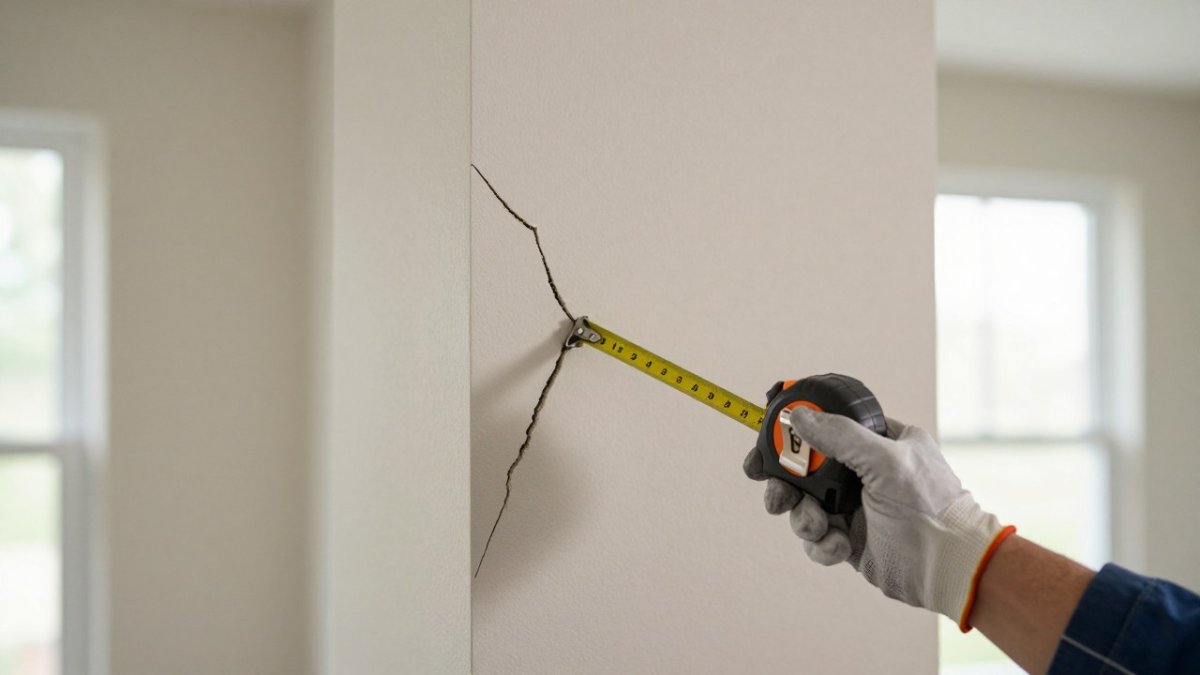
When you document a crack, measure its width at the widest point.
Keep a simple log: date, room, location, and width of each crack. Repeat measurements every few months.
For a visual reference, review sample inspection reports that show how crack findings are photographed and described.
Telling Foundation Problems Apart From Normal Settling
Many homes shift a little as they age. This is called settling, and it is often harmless. The difference between normal settling and a true foundation problem is not always obvious.
Normal settling tends to be gradual and mostly stable. Small cracks may appear in the first year or two as a new home adjusts. These are often cosmetic and do not grow.
Look-Alike Causes and How to Test for Each
Before you attribute a symptom to the foundation, rule out the more common causes. Each of these can produce sticking doors, cracks, or uneven floors without any structural movement:
- Plumbing leaks. A slow leak under a slab or behind a wall can soften soil and cause local settlement. Check the water meter with every fixture off; if the dial still moves, you likely have a leak. Look for unexplained damp spots, musty odors, or a creeping water bill.
- Roof and gutter leaks. Water entering at the roof or behind siding can stain ceilings and lift drywall tape in ways that look like movement. Check the attic and ceilings near exterior walls after heavy rain.
- Framing movement. Undersized, notched, or dried-and-shrunk floor joists can create a slope or bounce unrelated to the foundation. A springy floor is more often a framing issue than a foundation one.
To separate these from foundation movement, fix the cheap, reversible cause first and watch. Repair the leak, clean the gutters, adjust the hardware, and re-measure the same spot in 60 to 90 days. If the symptom persists or grows, the foundation deserves a closer look.
Moisture and Drainage Checks Around the Home
Water is the most common accelerant of foundation problems, so check drainage before you check anything else:
- Grade. The soil should slope away from the foundation at roughly a 6-inch drop over the first 10 feet. Low spots or soil that has settled against the wall are worth correcting.
- Downspouts. Confirm each one discharges several feet from the foundation and onto ground that drains away, not into a low pocket beside the wall.
- Gutters. Look for sagging, clogs, and seams that dump water down the siding.
Triage: When to Monitor, When to Call, When to Act Now
Use your log to sort findings into three buckets. This is not a diagnosis; it is a way to decide how quickly to get a professional opinion.
- Monitor. Hairline cracks under about 1/16 inch that have not changed, a single sticking door that responds to humidity, or cosmetic cracks in paint or drywall. Photograph, measure, and recheck in 60 to 90 days.
- Prompt professional assessment. Cracks wider than about 1/4 inch, cracks that have widened since your last measurement, stair-step cracks in brick or masonry, opening gaps at trim, doors or windows gone out of square over time, or a floor that has visibly dropped across a room. Schedule an evaluation in the near term.
- Potentially urgent. Bowing or bulging foundation walls, horizontal cracks in a foundation wall, a chimney separating from the house, doors that no longer close at all, or any sign combined with water intrusion. Call a licensed structural professional promptly.
These thresholds are guidance for prioritizing a professional opinion, not a substitute for one.
Homeowners cannot diagnose a structural issue with certainty. A qualified inspector can measure movement, check moisture, and look at areas you cannot easily reach.
The article points to several common look-alike causes and a few numeric thresholds that help separate them from true foundation movement.
| Look-alike cause | Typical sign | Quick check |
|---|---|---|
| Plumbing leak | Damp spots, musty odor, creeping water bill | Watch water meter with all fixtures off |
| Roof or gutter leak | Stained ceilings, lifted drywall tape | Check attic and ceilings after heavy rain |
| Framing movement | Springy or sloping floor | Framing issue more often than foundation |
| Seasonal soil moisture | Cracks wide in late summer, closed in spring | Re-measure same spot across seasons |
| Normal material shrinkage | Hairline cracks in first year or two | Monitor whether cracks stop changing |
| Worn hardware | Door will not latch | Tighten strike plate or hinges, recheck |
Deciding When to Walk Away From Foundation Issues
Sometimes the signs point to a problem serious enough to change your plans. Buyers, sellers, and owners all face this decision.
Start by sorting your findings into groups: which signs are cosmetic, which are changing over time, and which affect the structure in more than one area.
If you are buying, consider these steps:
- Request a professional foundation evaluation before the inspection period ends
- Ask for a written estimate of repair scope, if repairs are recommended
- Compare the repair estimate against your budget and your tolerance for risk
If you are selling, an early inspection can help you understand the issues before buyers raise them.
Avoid rushing. Foundation work can be costly, and a second opinion is reasonable when findings are significant.
Frequently Asked Questions
How can I tell if I have problems with the foundation on my house?
Look for a combination of signs rather than a single symptom. Check for stair-step cracks in brick or block, diagonal cracks in drywall that widen over time, doors and windows that stick, and floors that feel noticeably out of level. Use a level or a straightedge to measure slope in several rooms. One cosmetic hairline crack rarely signals a structural problem, but several related signs appearing together warrant a professional evaluation by a qualified home inspector.
What are the early signs of foundation problems?
The earliest signs are usually small and easy to miss. They include hairline cracks in drywall corners, gaps between baseboards and the floor, doors that begin to rub the frame, and sticking windows that were smooth a few months earlier. Outside, watch for widening gaps where the foundation meets the siding or brick, and for water pooling near the base of the home. Record what you see with dated photos so you can compare changes over time.
How can I tell the difference between foundation problems and normal settling?
Normal settling tends to be minor, stable and limited to small hairline cracks that do not grow. Foundation problems usually show active change: cracks that widen, offset or reappear after repair, sloping floors that get worse, or bowing basement walls. Compare photos over several months and note whether symptoms are progressing. If you cannot tell, a professional assessment will give you a clearer answer than guesswork.
When should I call a professional about foundation issues?
Contact a qualified professional promptly if you see cracks wider than about 1/4 inch, a floor gap of 3/16 inch or more, bowing or leaning walls, or doors and windows that suddenly stop closing. Also call if symptoms are spreading or changing quickly. A home inspector can document the condition of the property. Inspections describe observable conditions and do not replace a structural diagnosis.
