
What is a home inspection—and why is it valuable?
A careful visual review of accessible systems and components, supported by clear photographs and plain-language reporting.
What the inspector does
The inspector moves through the property methodically, looking for visible damage, unsafe conditions, poor installation, signs of moisture, worn materials, and items that may need maintenance or professional evaluation.
The inspection is visual and non-invasive. Walls are not opened, belongings are not moved, and concealed or unsafe areas cannot be evaluated.
What you receive
- Photographs of important findings
- Clear explanations of observed conditions
- Disclosure of inaccessible areas
- Recommendations for qualified-contractor evaluation
- A written report for later review
Know the costs before they become yours.
A home inspection gives you a clearer picture of the property’s visible condition before closing. FalconPoint documents accessible major systems, structural concerns, and visible installation issues so you can decide what needs a closer look and what costs to plan for.
Denver-area replacement and repair costs show why those details matter:
| Potential project | Illustrative local cost |
|---|---|
| Central air conditioner replacement | About $5,000–$11,000 |
| Furnace replacement | Starting around $4,500 |
| Tank water heater replacement | $1,092–$2,261 |
| Roof replacement | $7,419–$16,461 |
| Window replacement | $450–$1,200 per window |
| Foundation repair | $3,427–$13,953 |
Illustrative Denver-area figures, not estimates for a particular property. Actual costs depend on equipment, materials and the work required. Sources: AC, furnace, water heater, roof, windows, and foundation.
Comfort and energy costs matter, too
When the attic is safely accessible, we look for visible missing or displaced insulation and ductwork that appears crushed, disconnected, or obstructed. Having these concerns evaluated and corrected may improve comfort and reduce heating and cooling costs over time. We inspect accessible heating and cooling equipment separately because one system may need work while the other does not.
Inspection findings may help you negotiate before closing
If the inspection identifies a concern, you can use the documented findings to negotiate with the seller before closing. Depending on your contract and deadlines, you may ask for repairs, a closing-cost credit, or a lower purchase price. The seller may agree, counter, or decline. A seller who will not allow an inspection gives you reason to pause and ask why; it does not by itself prove a defect.
A small investment now could help you avoid costly surprise repairs and major headaches later. We also look for visible safety concerns that could affect you and your family. A visual inspection cannot uncover every hidden defect, guarantee future performance, or certify that a home is safe.
See what your inspection covers
These illustrations help show the systems and components considered during a visual home inspection. Your report will use photographs from the property to document the conditions observed.
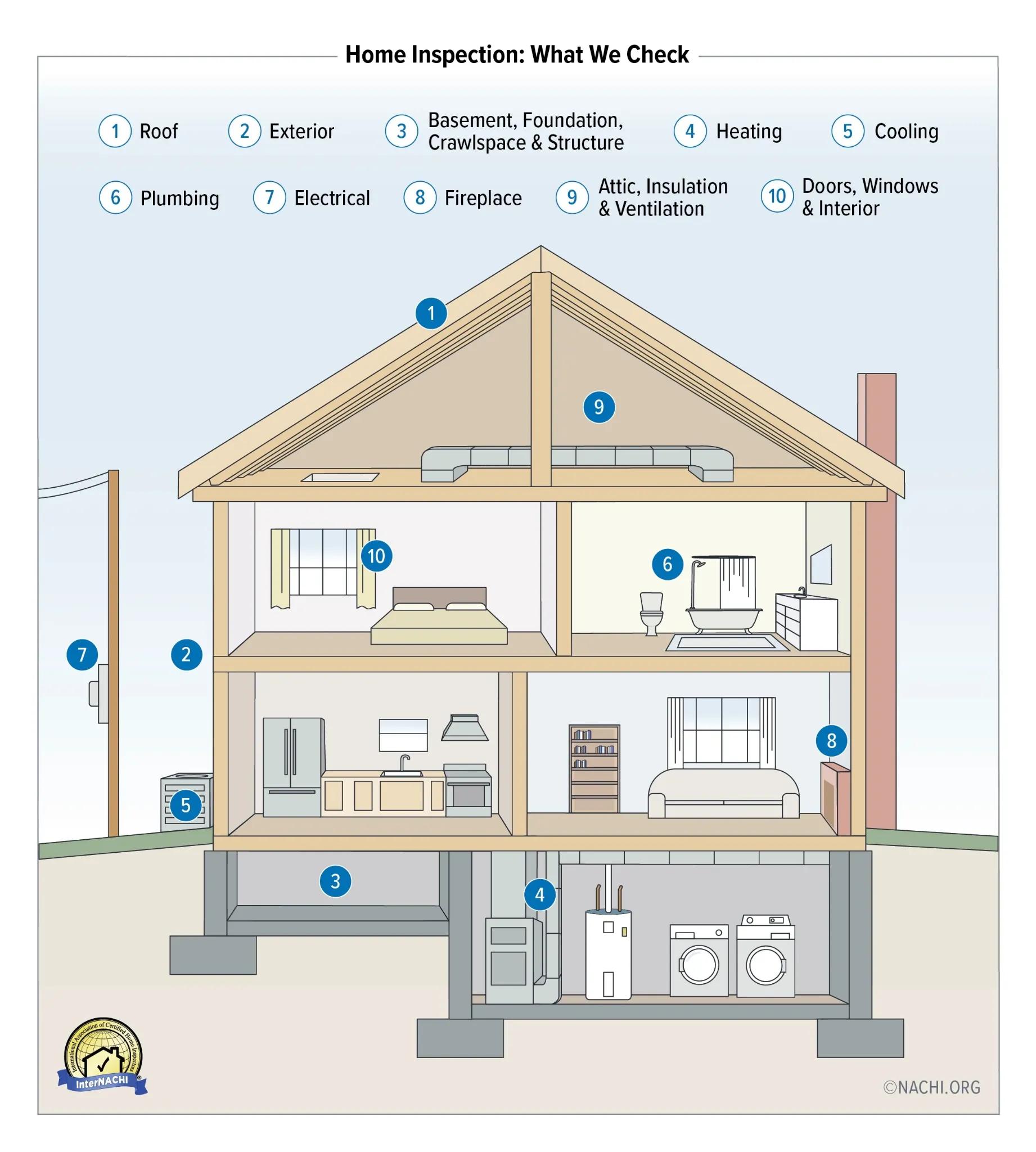
What a home inspection covers
Roof, exterior, structure, heating, cooling, plumbing, electrical, fireplace, attic, ventilation, doors, windows, and accessible interior components.
Educational illustration © InterNACHI. Used by FalconPoint Inspections LLC under active-member license.
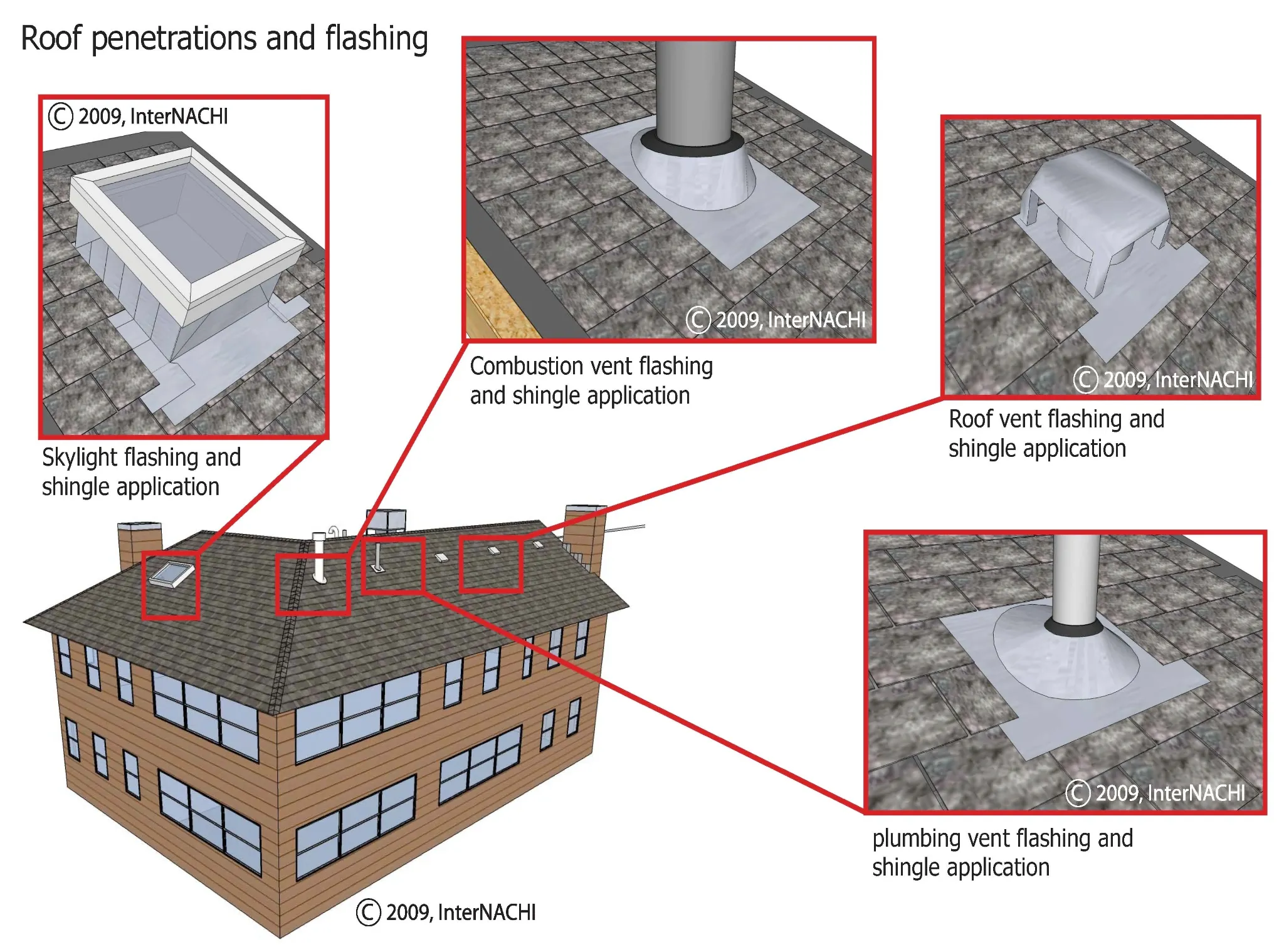
Roof penetrations and flashing
Important transitions where visible deterioration, installation concerns, or moisture pathways may appear.
Educational illustration © InterNACHI. Used under active-member license.
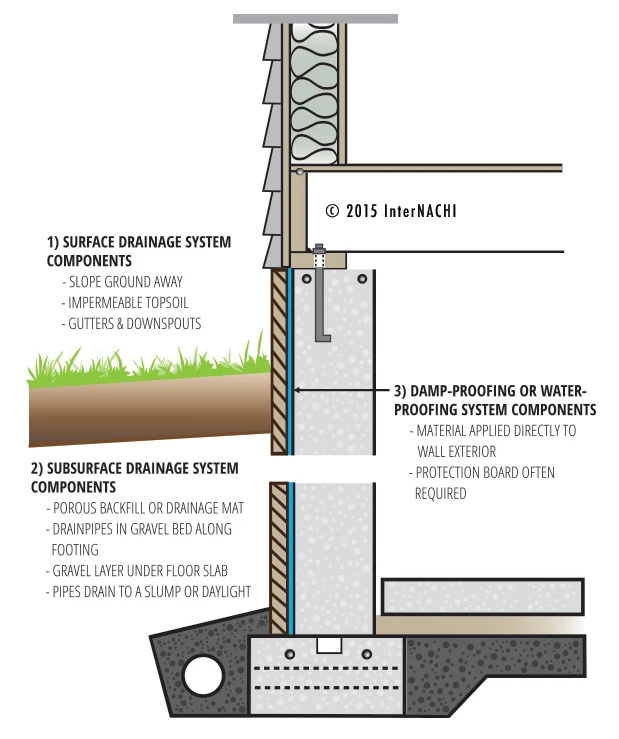
Drainage around the home
Grading, gutters, downspouts, subsurface drainage, and damp-proofing work together to manage water.
Educational illustration © InterNACHI. Used under active-member license.
If we cannot inspect it, we show you why.
When a client or responsible party is present, the inspector may ask whether an obstruction can be safely moved when it prevents access to a major system or major inspection area, such as an attic entrance, electrical panel, HVAC unit, water heater, or crawlspace opening. We will not ask for every minor obstruction to be moved—for example, towels or personal belongings covering a shutoff, outlet, or window. Inspectors do not move vehicles, furniture, stored belongings, or personal property. If a major area cannot be safely made accessible, the limitation is documented with a photograph whenever practical.
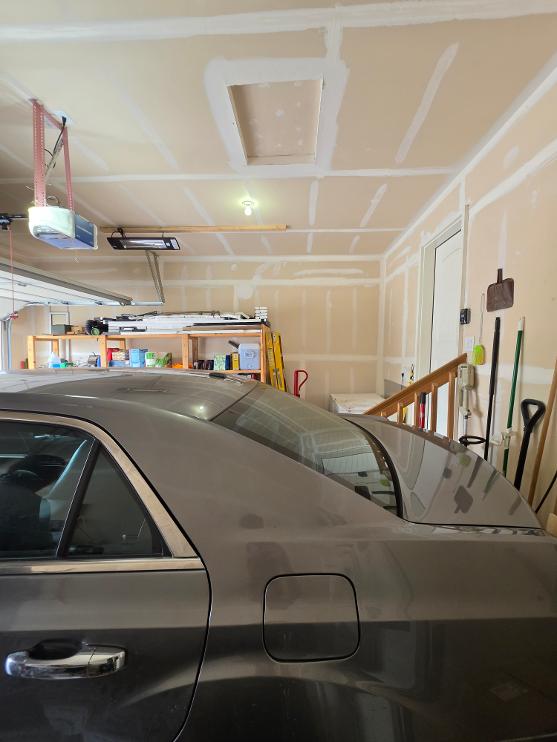
Garage Attic Access
At the time of inspection, the garage attic access was obstructed by a vehicle positioned beneath the opening. Because this obstruction prevented inspection of a major area, the client or responsible party would be asked, when present, whether the vehicle could be safely repositioned. The inspector does not move client vehicles. If the vehicle cannot be moved, safe ladder placement is not possible and the attic is not entered or inspected.
Recommendation: Inspector recommends client have the attic inspected at a later time when the vehicle does not prevent access.
Review a FalconPoint sample inspection report.
See how photographs, observations, limitations, and qualified-contractor recommendations are organized for clients.