
FalconPoint Inspections LLC
Last Updated: November 4, 2026
Quick Summary
Start reading a home inspection report at the summary page, which lists the findings that matter most, then review the full report section by section, which takes most buyers about 30 to 45 minutes. Sort findings into fix before closing, fix in the first year, and monitor.
- A home inspection is a visual, non-invasive review of what the inspector can see and reach.
- Red flags fall into safety hazards, active water intrusion, structural movement, and systems at the end of their service life.
- Read the report one system at a time instead of skimming it.
- Report language typically covers what was seen, why it matters, and what to do next.
- Ask each contractor for a written quote you can attach to your negotiation.
Table of Contents
- Step 1: Start With the Summary and Rating System
- Step 2: Spot Home Inspection Report Red Flags Section by Section
- Step 3: Use Home Inspection Report Examples to Decode the Language
- Frequently Asked Questions
Step 1: Start With the Summary and Rating System
Learning how to read a home inspection report starts at the summary page, not page one. The summary lists the findings that matter most, and reviewing the full report takes most buyers about 30 to 45 minutes.
- Scope: a home inspection is a visual, non-invasive review of what the inspector can see and reach. Read what a home inspection includes.
If you are weighing the report against what you paid, view inspection pricing by property size.
Here are the key facts to keep in mind as you work through the report.
| Item | Value | Note |
|---|---|---|
| Where to start | Summary page | Lists the findings that matter most |
| Time to review full report | 30 to 45 minutes | For most buyers |
| Inspection scope | Visual, non-invasive | Only what the inspector can see and reach |
Step 2: Spot Home Inspection Report Red Flags Section by Section
Home inspection report red flags fall into a few clear groups: safety hazards, active water intrusion, structural movement, and systems at the end of their service life. Read the report one system at a time instead of skimming.
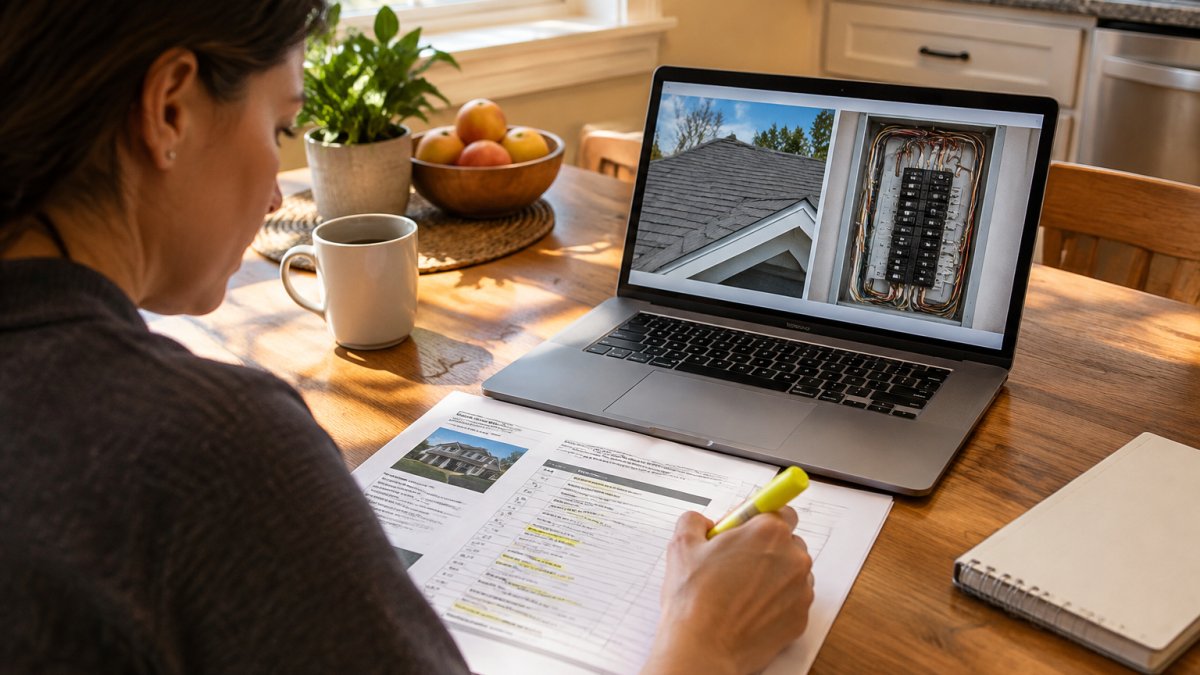
Work through these sections in order:
- Roof and attic. Missing shingles, active leaks, and attic stains are urgent repair items.
- Foundation and structural components. Cracks wider than a hairline, bowing walls, and uneven floors deserve a specialist inspection.
- Electrical system. Double-tapped breakers, missing outlet covers, and ungrounded outlets are safety hazards.
- Plumbing system. Slow drains, corroded supply lines, and stains under sinks point to leaks; our guide to spotting plumbing defects early walks through the warning signs.
- HVAC system. Note the age of the units and any signs of poor maintenance.
- Exterior, interior, and appliances. These tend to be maintenance items, but water stains and damaged siding still matter.
A common mistake is treating every line as equally urgent. Sort findings into three buckets: fix before closing, fix in the first year, and monitor.
Step 3: Use Home Inspection Report Examples to Decode the Language
Home inspection report examples teach you faster than any glossary. Take one entry: “Moisture staining observed on roof sheathing near the chimney; further evaluation by a qualified roofing contractor recommended.” That is report language for three things: a visible defect, a likely source, and a next step.
- What was seen: the visible condition, backed by photos.
- Why it matters: the risk if it is left alone.
- What to do next: monitor it, get a contractor estimate, or request a specialist inspection.
When you turn findings into repair estimates, ask each contractor for a written quote you can attach to your negotiation. For a closer look at how findings, photographs, access limitations, and recommendations are documented, review a sample home inspection report. To interpret your own report, book a FalconPoint inspection.
Frequently Asked Questions
How do you interpret a home inspection report?
Start with the summary and the inspector’s rating system, then read each section against the photos and notes. Separate major concerns like structural or safety hazards from moderate and minor items, and note anything marked for further evaluation by a specialist. If a finding is unclear, ask the inspector directly. A home inspection report describes visible condition on the inspection date, so treat it as a decision tool, not a guarantee.
What is the biggest red flag in a home inspection?
Structural and safety issues top the list: foundation cracks or movement, roof defects, water intrusion, and electrical hazards such as double-tapped breakers or missing GFCI protection. These are the findings most likely to carry urgent repair costs or risk. A home inspection report red flag is anything an inspector recommends further evaluation for by a qualified contractor. Get a specialist estimate before your inspection contingency deadline so you can negotiate with real numbers.
How long should you spend reviewing a home inspection report?
Plan for at least one to two hours for a typical single-family home, longer for older properties or reports with many findings. Read the summary first, then the full narrative and photos section by section. How long to review a home inspection report also depends on your contingency deadline, so confirm that date before you start. Write down questions as you go and send them to your inspector while the details are fresh.
A report only helps if you act on it before your contingency deadline. FalconPoint Inspections LLC gives you property-specific photographs, plain-language observations, documented access limitations, and qualified-contractor recommendations, all without sales pressure. Get started with FalconPoint Inspections LLC and read your next report with confidence.
