
FalconPoint Inspections LLC
Last Updated: October 29, 2026
Quick Summary
Identifying major plumbing defects early means checking under sinks, testing shutoff valves, and watching for hidden leak signs like rising water bills or musty smells. Catching plumbing defects at inspection keeps them small, while the same defects found a year later have rotted subfloor and soaked drywall behind them.
- Household leaks waste roughly a trillion gallons of water nationally each year, according to the EPA’s WaterSense program.
- Run the faucet hot then cold and wipe each joint with paper towel to check for fresh moisture.
- Turn each shutoff valve a quarter turn and back, then check for drips.
- Hidden leak signs include a climbing water bill, a musty smell, or running water when fixtures are off.
- Galvanized steel pipes show rust-colored water, low pressure, and pinhole leaks.
Table of Contents
- Plumbing Defects: What They Are and Why Timing Decides the Cost
- Your Room-by-Room Plumbing Inspection Checklist
- Signs of a Hidden Water Leak You Can Catch Without Opening a Wall
- Home Inspection Plumbing Red Flags That Point to Major Defects
- Aging Plumbing Pipes Warning Signs and What They Mean for Your Purchase
- Schedule an Inspection Before Plumbing Defects Get Expensive
- Frequently Asked Questions
Plumbing Defects: What They Are and Why Timing Decides the Cost
Identifying major plumbing defects early is the cheapest repair decision a homeowner ever makes. A plumbing defect is any flaw in the pipes, fixtures, drains, or water-heating system that causes leaks, restricted flow, water damage, or unsafe water conditions. At FalconPoint Inspections LLC, we see the same pattern on repeat: small defects caught at inspection stay small, and the same defects caught a year later have rotted subfloor and soaked drywall behind them.
The U.S. Environmental Protection Agency’s WaterSense program notes that household leaks alone waste roughly a trillion gallons of water nationally each year. That is water you pay for twice: once on the bill, once on the repair.
Timing is the whole game. A slow supply-line weep costs a washer and an afternoon. Left alone, it soaks a cabinet base, warps flooring, and invites mold. The defect did not change. The window did.
What a home inspection covers and why access limits matter is worth understanding before you tour a single property.
Your Room-by-Room Plumbing Inspection Checklist
Use this plumbing inspection checklist on any walkthrough. You need a flashlight, a roll of paper towel, and fifteen minutes per room. Work from the fixture down to the cabinet floor.
Under Sinks and Around Fixtures
Start where leaks hide. Open every cabinet and look at the base.
- Run the faucet hot, then cold, and watch the supply connections
- Wipe each joint with paper towel and check for fresh moisture
- Look for white crust or green residue on fittings
- Check that the cabinet floor is dry and unstained
- Press the base of the sink for softness or swelling
Supply Lines, Shutoff Valves, and the Water Heater
Supply lines and shutoff valves fail quietly. Test them.
- Turn each shutoff valve a quarter turn and back, then check for drips
- Look for bulging, cracking, or stiff braided lines
- Check the water heater base and the pan for rust or standing water
- Look for corrosion on the tank fittings and the relief valve
- Note the heater’s age from the label
Signs of a Hidden Water Leak You Can Catch Without Opening a Wall
The clearest signs of a hidden water leak are usually not water at all. They are changes: a bill, a smell, a sound, a stain.
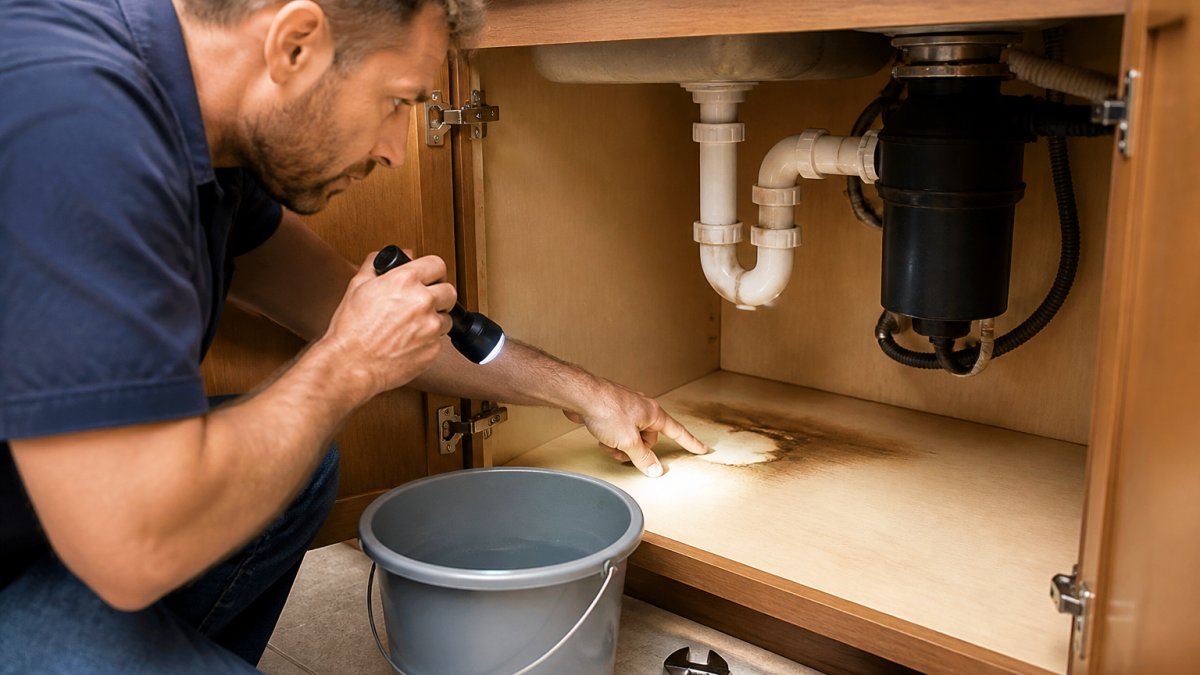
Look for these:
- A water bill that climbs with no change in habits
- A musty smell in one room that never clears
- The sound of running water when every fixture is off
- Paint that bubbles or blisters on a wall or ceiling
- A floor tile that rocks or a baseboard that swells
- Warm spots on a slab floor, which point to a hot-line leak
Home Inspection Plumbing Red Flags That Point to Major Defects
Certain home inspection plumbing red flags point past a simple fix and toward a major defect.
- Active drips or fresh staining at any visible joint
- Water stains on ceilings below bathrooms
- Rusted or crumbling cast-iron drain sections
- A water heater past its typical service life with corrosion at the fittings
- Improper slope on drain lines, or a drain that gurgles
- Flexible corrugated drain pipe under a sink, a common shortcut fix
Access limits matter: where the inspector cannot see, the report documents the limitation rather than guessing. See how findings and access limits appear in a sample report.
Aging Plumbing Pipes Warning Signs and What They Mean for Your Purchase
Aging plumbing pipes warning signs matter most at the point of sale. Older homes carry pipe materials with known failure patterns, and the material itself tells you what to expect.
- Galvanized steel: rust-colored water, low pressure, pinhole leaks
- Polybutylene: gray plastic supply lines prone to sudden failure
- Cast iron drains: rough interior, recurring clogs, cracks at joints
- Brass or copper with corrosion: thinning walls at fittings
None of these means walk away. It means budget. A material at the end of its service life is a known future cost, and a seller who understands that will negotiate.
The U.S. Consumer Product Safety Commission publishes safety notices on certain older pipe and fitting materials, useful background when a report flags one.
The material itself tells you what to expect, so here is what each older pipe type signals.
| Pipe material | Warning signs |
|---|---|
| Galvanized steel | Rust-colored water, low pressure, pinhole leaks |
| Polybutylene | Gray plastic supply lines prone to sudden failure |
| Cast iron drains | Rough interior, recurring clogs, cracks at joints |
| Brass or copper with corrosion | Thinning walls at fittings |
Schedule an Inspection Before Plumbing Defects Get Expensive
The best time to find a plumbing defect is before it finds your floor. An independent, non-invasive inspection documents what is visible, notes what was not accessible, and gives you plain-language findings.
FalconPoint Inspections LLC provides property-specific photographs, plain-language observations, documented access limitations, and qualified-contractor recommendations, with no sales pressure. Our team is insured for professional liability (E&O) and general liability.
Ready to move? Book your FalconPoint inspection. For current pricing, visit the FalconPoint Inspections LLC pricing page. Townhome, condo, new-home, warranty, and rental owners can compare inspection services for the property in front of you before scheduling.
Frequently Asked Questions
What are the early signs of a major plumbing problem?
The earliest signals are usually small and easy to dismiss: a water bill that climbs without a change in use, a faint musty smell under a cabinet, or a drain that empties more slowly than it used to. Watch for discolored caulk or grout, soft spots in flooring near fixtures, and a toilet that rocks slightly at the base. Any one of these on its own may be minor, but two or three together point to a plumbing defect worth documenting in an inspection before it spreads.
How do you know if a pipe is leaking behind a wall?
You rarely see the pipe itself, so you read the symptoms. Look for paint that bubbles or peels in a straight line, drywall that feels soft or cool to the touch, and a musty odor that gets stronger in one room. A water meter test helps confirm it: shut off every fixture in the house and watch the meter’s leak indicator. If it moves, water is escaping somewhere. A non-invasive inspection can document these signs and flag the affected area for a qualified plumber.
Can low water pressure indicate a serious plumbing defect?
It can. Low pressure at one fixture usually means a clogged aerator or a failing cartridge, which is a cheap fix. Low pressure across the whole house is a different story. It can point to a corroded galvanized supply line, a partially closed main valve, or a leak pulling water away from the system. If pressure drops when a second fixture runs, that is a strong sign the supply piping is undersized or scaled up and should be evaluated during a plumbing inspection.
What plumbing defects should homebuyers look for?
Buyers should focus on the defects that carry the biggest repair bills: active leaks at supply lines or the water heater, corroded or polybutylene piping, a water heater past its service life, poor drainage at floor drains, and any sign of past water damage that was painted over rather than repaired. Ask for documentation of the water heater’s age, look under every sink, and check the main shutoff valve. A home inspection plumbing red flags list should be part of your review before closing.
Plumbing defects reward the homeowner who looks early and punish the one who waits. If you are buying, selling, or holding a property through a builder warranty, get an independent read on the visible condition before the window closes. Get started with FalconPoint Inspections LLC and walk into closing with findings you can actually use.
