
FalconPoint Inspections LLC
Quick Summary
An 11 month warranty inspection is a professional review of a newly built home conducted shortly before the builder’s one-year warranty expires. It documents the home’s observable condition while the builder is still responsible for repairs, giving the homeowner a written record of concerns to raise before coverage ends.
- Schedule the inspection roughly 10 to 11 months after closing.
- Confirm your warranty expiration date from closing documents, not an estimate.
- The inspection is non-invasive and does not open walls or test concealed systems.
- Report findings in writing with photographs and a list of access limitations.
- Submit warranty claims in writing before the coverage period ends.
Table of Contents
- What Is an 11 Month Warranty Inspection?
- Why the 11th Month Is the Ideal Time to Inspect
- What an 11 Month Warranty Inspection Covers
- When to Schedule an 11 Month Warranty Inspection
- 11 Month Warranty Inspection Checklist
- How Much an 11-Month Warranty Inspection Costs
- What to Include in a Builder Warranty Claim
- Booking Your 11 Month Warranty Inspection With FalconPoint
- Frequently Asked Questions
What Is an 11 Month Warranty Inspection?
An 11-month warranty inspection is a professional review of a newly built home conducted shortly before the builder’s one-year warranty expires. It is a documented check of the home’s observable condition, performed while the builder is still responsible for repairs. The inspection gives the homeowner a written record of concerns to raise before that window closes.
Many new-home builder warranties include a one-year workmanship and materials coverage period. An independent inspection is separate from that walkthrough. It is performed for the homeowner, not the builder, and it documents what the inspector can observe on the day of the visit.
The inspection is non-invasive. The inspector does not open walls, dismantle equipment or test systems beyond normal operation. The report lists observations in plain language, includes property-specific photographs and records any access limitations, such as locked rooms or systems that could not be operated.
Residential warranty standards overview
Here is what a typical 11-month warranty inspection includes:
- Exterior and structural components, including grading, siding, roofing and foundation
- Interior systems, including HVAC, plumbing and electrical
- Drywall, flooring, doors and windows
- A written report with photographs and a summary of concerns
- A list of access limitations and items that require a qualified contractor
Why the 11th Month Is the Ideal Time to Inspect
The eleventh month is the ideal time because it gives the homeowner one full year of seasonal change to reveal problems, while leaving enough time to document them before coverage ends. Many defects do not appear immediately after move-in. Settlement cracks, drainage problems and HVAC performance issues often show up only after the home has experienced heating, cooling and rain across several seasons.
Waiting until the warranty has expired shifts the cost of repair to the homeowner. Scheduling the inspection in the eleventh month leaves a few weeks to submit a written warranty claim, which many builders require within a set period.
A common mistake is treating the one-year mark as a deadline for completing the inspection itself. Builders often require claims to be submitted in writing before coverage ends, so the report should be finished and delivered well ahead of that date.
What an 11 Month Warranty Inspection Covers
An 11-month warranty inspection covers the visible, accessible components of the home. The scope is broad, but it is limited to what can be observed without destructive testing. Understanding that limit helps homeowners interpret the report correctly.
Exterior and Structural Components
Exterior review focuses on the building envelope and site drainage. Inspectors typically examine grading around the foundation, gutters and downspout placement, siding and trim gaps, window seals, roof flashing and visible roof surfaces. Structural review looks for foundation cracks, uneven floors, doors that stick and signs of moisture intrusion.
Settlement cracks are common in newer homes and are often cosmetic, but their width, pattern and location matter. Grading that slopes toward the foundation can allow water to collect against the structure, which is why drainage is one of the first items reviewed.
Interior Systems: HVAC, Plumbing, and Electrical
Interior systems review checks that major components operate and appear correctly installed. Interior systems are reviewed for observable condition and installation, and any system that could not be tested is listed as a limitation in the report.
Inspectors do not evaluate concealed plumbing or wiring inside walls. They also do not test appliances beyond basic operation unless that is part of the agreed scope. Any system that could not be tested is listed as a limitation in the report.
The inspection covers the visible, accessible parts of the home, which fall into two main groups.
| Area | Components reviewed | Note |
|---|---|---|
| Exterior and structural | Grading, siding, roofing, foundation, gutters | Review limited to visible, accessible components |
| Interior systems | HVAC, plumbing, electrical | Concealed wiring and plumbing are not evaluated |
| Drywall, flooring, doors, windows | Observable condition | Listed in the report with photographs |
| Report contents | Photographs, summary of concerns, access limitations | Systems not tested are listed as limitations |
When to Schedule an 11 Month Warranty Inspection
Schedule the inspection roughly 10 to 11 months after closing, early enough that the written report can be delivered and any claim submitted before the warranty expires.
Check your builder’s warranty terms before booking. Some builders specify a claim window, a required format or a notice period. Confirm the exact expiration date from your closing documents rather than estimating it from the closing date.
Plan the inspection for a day when the home can be accessed fully. Clear the attic and crawl space if possible, and make sure the HVAC system can run. Inspections performed in mild weather may not reveal heating or cooling problems, so the timing of the visit matters.
11 Month Warranty Inspection Checklist
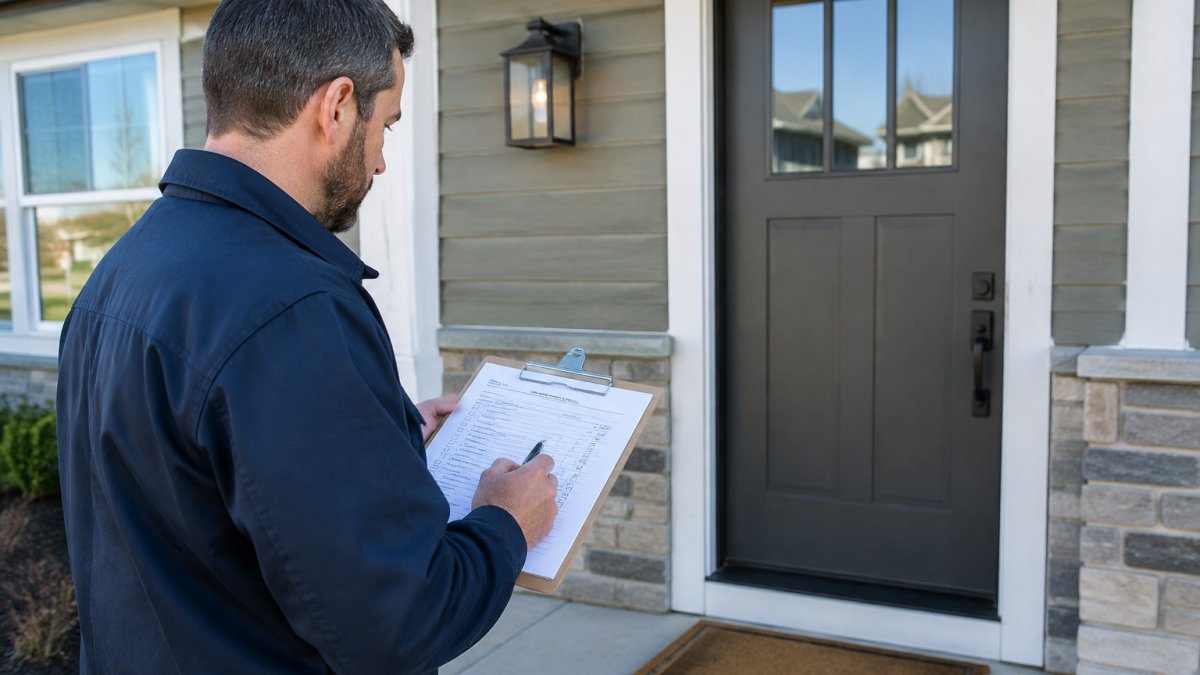
Use this checklist to prepare before the inspection and to review the report afterward:
- Confirm your warranty expiration date from closing documents
- Locate your builder’s warranty terms and claim procedure
- Gather any walkthrough reports or punch lists from closing
- Clear access to the attic, crawl space, garage and mechanical room
- Ensure the HVAC system and water supply are operational
- Note any concerns you have observed since move-in, with dates
- Request a written report with photographs and access limitations
- Review the report for items that require a qualified contractor
- Submit warranty claims in writing before the coverage period ends
- Keep copies of the report, photographs and all correspondence
How Much an 11-Month Warranty Inspection Costs
Pricing for an 11-month warranty inspection depends on the size of the home, its property type, and the scope of the review. For current pricing, please visit the FalconPoint Inspections LLC pricing page.
What drives the price
For current rates and a quote for your specific property, please visit the FalconPoint Inspections LLC pricing page.
How to compare quotes
When comparing quotes from any provider, confirm what is included. Ask whether the report includes photographs, whether a written summary is provided, and whether the inspector notes access limitations. A lower price may reflect a narrower scope, so review the sample report and scope of work before deciding.
A practical comparison rubric:
- Does the quote state the scope in writing, including which systems are operated and which are visual-only?
- Is a sample report available, and does it include photographs and a limitations section?
- Is the inspector licensed or certified in the relevant discipline, and does the quote say so?
- Is the report delivered in time to submit a claim before the warranty expires?
- Are there add-on fees for attic, crawl space, or roof access that other quotes include?
Is it worth the cost?
The inspection is best understood as a documented second opinion purchased before the builder’s obligation ends. A single missed item, an improperly flashed roof penetration, a grading slope that directs water toward the foundation, or an HVAC defect that only appears under load, can cost far more to repair after the warranty expires than the inspection fee. The value is not only in the defects found but in the written record that supports a claim if the builder disputes one.
For homeowners weighing a DIY walkthrough against a professional inspection, the trade-off is straightforward: a homeowner can note cosmetic items and obvious concerns, but safety-related systems, roof and attic conditions, and electrical panel observations generally require a licensed inspector to document in a form a builder will accept.
What to Include in a Builder Warranty Claim
A builder warranty claim should be specific, dated, and supported by evidence, and it should be organized so the builder’s warranty administrator can act on it without asking follow-up questions. Claims are often rejected for procedural reasons, such as missing dates, vague locations, or submission outside the required channel. Structuring the claim correctly is therefore as important as documenting the defect.
The core claim packet
Build one packet per claim submission, and keep a complete copy for your records. A defensible packet typically includes:
- Cover letter or claim form with the property address, closing date, warranty expiration date, and your contact information
- A numbered defect list, one item per line, each with the room or elevation, a plain-language description, and the date you first observed it
- Photographs keyed to each numbered item, with the item number visible in the filename or caption
- The independent inspection report, referenced by page or item number rather than attached as an unlabeled PDF
- A copy of the relevant warranty clause you are invoking, quoted or highlighted
- Proof of delivery, a read receipt, certified mail slip, or portal confirmation number
Numbering matters. When the builder’s superintendent walks the home, a numbered list lets both parties mark items as verified, disputed, or scheduled in a single pass, and it prevents items from quietly dropping off the punch list.
Match the channel and the clock
Submit the claim in the format and channel your builder requires, usually a written form, a homeowner portal, or an email to a designated warranty address. Verbal reports to a superintendent are not claims; if you report something by phone, follow up in writing the same day and reference the call.
Watch out: many builders impose a notice period for certain defect categories, and some warranty documents shorten the window for specific items such as landscaping, drainage, or cosmetic finishes, so confirm each category’s deadline rather than assuming the one-year date covers everything.
A negotiation script you can adapt
Most homeowners do not know what to say when a builder pushes back. The following structure keeps the exchange factual and creates a written record:
- Open with the record, not the grievance. “Per the inspection report dated [date], item [number] documents [defect] at [location]. This was observed on [date] and reported to your office on [date].”
- Cite the warranty language. “This item falls under the workmanship and materials coverage described in section [X] of the warranty document provided at closing.”
- State the requested remedy and a deadline. “I am requesting repair or written denial by [date], which is before the coverage period ends on [date].”
- Ask for the denial in writing. “If the item is not covered, please confirm the basis in writing so I can review it against the warranty terms.”
- Close with the paper trail. “I am copying this message to [email] and will retain it with the inspection report and photographs.”
A common pattern is for a builder to agree verbally and then let the item lapse past the warranty date. The written deadline in step three is what prevents that outcome.
If the builder denies or delays
If the builder does not respond within a reasonable time or denies a valid claim, document each follow-up with dates and names, and keep every message. Review your closing documents for any dispute-resolution or arbitration clause before escalating. For items that present a safety concern or an active water intrusion, consult a licensed contractor for a written opinion and, where appropriate, a local attorney about your options under your warranty and state law.
Items listed with photographs, clear descriptions, and a numbered reference are easier for the builder to evaluate.
Booking Your 11 Month Warranty Inspection With FalconPoint
FalconPoint Inspections LLC performs 11-month warranty inspections for newly built homes throughout Lakewood and the Colorado Front Range. Compare inspection services for the property in front of you before booking. Our reports are independent, plain-language and documented with photographs and access limitations.
To schedule an inspection, visit the FalconPoint Inspections LLC booking page. Schedule early so your report arrives well before your warranty expires.
Frequently Asked Questions
Is an 11-month inspection worth it?
For most new-construction buyers, yes. The builder’s warranty typically covers workmanship defects for one year, and the 11th month leaves time to document issues and submit a claim before coverage ends. An independent inspector reviews the home without a stake in the builder’s response, which makes the findings easier to present in a warranty claim.
How much does an 11-month warranty inspection cost?
Pricing depends on the home’s size, age, and the scope of the inspection. FalconPoint Inspections LLC lists current pricing on its website, where you can review options and request a quote for your property. Compare the scope of each quote, not just the price, to make sure structural, HVAC, plumbing, and electrical systems are all covered.
Are warranty inspections worth it?
A warranty inspection can be useful when it finds defects the builder must address while coverage is active. Many workmanship problems only appear after a few seasons of use. A written report with dated photographs gives you a record to present to the builder.
What should I do with the inspection report?
Review the report and sort findings into items covered by the builder’s warranty, items that need monitoring, and items that need immediate attention. Send the builder a written request that references specific report entries and photographs. Keep copies of all correspondence, and track each deficiency until it is resolved. If the builder does not respond, the documented report supports escalation through the builder’s warranty department.
Is an 11-month inspection the same as a one-year home inspection?
Not exactly. An 11-month inspection is scheduled before the one-year builder warranty expires, so it gives you time to act on findings. A one-year inspection done on or after the anniversary may leave little or no time to submit claims. Both approaches document the home’s condition, but timing is the key difference.
