
FalconPoint Inspections LLC
Last Updated: November 1, 2026
Quick Summary
During a home inspection, the inspector arrives, examines the house from roof to foundation, and delivers a written report with photographs. The visit follows a repeatable route, starting outside with the roof, siding, grading, drainage, and foundation, then moving inside to the major systems and interior rooms. The inspection is a non-invasive visual assessment of the property’s major systems and structural components.
- The inspector needs a clear path to the electrical panel, attic hatch, furnace, and water heater.
- Inside, the inspector works through heating, cooling, plumbing, and electrical systems first.
- The written report should include property-specific photographs, plain-language observations, and any access limitations.
- Duration depends on the size, age, and condition of the property.
- Read the report summary first for safety issues and major defects, then the detail.
Table of Contents
- What to Expect During a Home Inspection: A Step-by-Step Walkthrough
- What Does a Home Inspection Include? A System-by-System Breakdown
- How Long Does a Home Inspection Take?
- How to Prepare for a Home Inspection
- Home Inspection Report Examples: How to Read What You Receive
- What Inspectors Do Not Inspect
- Costs and Optional Specialist Inspections
- After the Inspection: Negotiations and Next Steps
- Frequently Asked Questions
What to Expect During a Home Inspection: A Step-by-Step Walkthrough
Knowing what to expect during a home inspection turns one of the most nerve-wracking days of a home purchase into a manageable, predictable appointment. A home inspection is a non-invasive visual assessment of the property’s major systems and structural components, performed to identify visible defects and potential safety hazards before you commit. The process is more straightforward than most people fear.
Here is the short version: the inspector arrives, examines the house from roof to foundation, and delivers a written report with photographs. Below, we break down each stage so you know precisely what happens, when, and why.
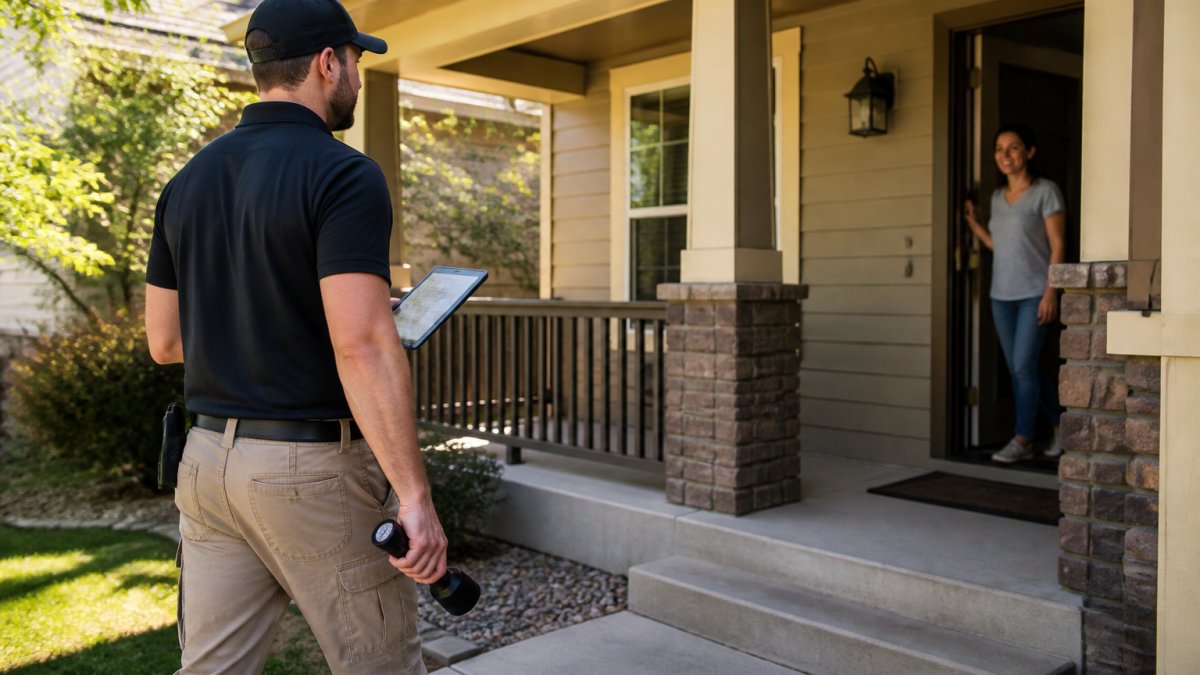
Before the Inspector Arrives
Preparation starts with access. The inspector needs a clear path to the electrical panel, the attic hatch, the furnace, and the water heater. Move boxes, unlock gates, and make sure pets are secured or removed from the property.
Confirm three details in advance: the appointment window, whether anyone needs to be present, and how the report will be delivered.
The On-Site Inspection, Room by Room
The visit follows a repeatable route. The inspector starts outside, examining the roof from the ground or with binoculars where safe access is unavailable, then checks siding, grading, drainage, and the foundation for cracks or sagging.
Inside, the inspector works through the major systems first: heating, cooling, plumbing, and electrical. Then come the interior rooms, where walls, ceilings, floors, windows, doors, locks, and seals get examined for water damage, moisture staining, discoloration, and failed hardware. The inspector will run faucets, flush toilets, test light switches and fans, and open and close windows and doors to evaluate their condition.
After the Walkthrough: Report Delivery
Expect a written inspection report. It should include property-specific photographs, plain-language observations, and a clear note of any access limitations, such as an attic hatch that could not be safely opened or a roof area that was not visible.
Read the summary first, then the detail. Ask questions about anything unclear.
What Does a Home Inspection Include? A System-by-System Breakdown
A standard home inspection covers the visible condition of the structure and its major systems, but it is not a code compliance review or a guarantee. The inspection covers what can be seen and safely accessed on the day of the visit.
If you want the fuller explanation of scope and why access limitations matter, our guide on what a home inspection covers and why it is valuable walks through the fundamentals before you get into the system-by-system detail below.
Structural Components and the Roof
The structural review looks at the foundation, framing where visible, walls, ceilings, and floors for cracks, sagging, or signs of movement. Roof condition gets close attention: roof coverings, shingles, flashing, and visible penetrations are examined for wear, damage, or improper installation.
Watch out: a roof that is not safely walkable will be assessed from the ground or with optics, and the report should say so. That limitation is not a gap in the inspection; it is an honest record of what could be seen.
Heating, Cooling, Plumbing, and Electrical
The heating and cooling systems, often grouped as HVAC, are tested for basic operation. The inspector will check the visible condition of the heating and cooling equipment.
The plumbing and electrical systems are examined for visible defects and potential safety hazards, as far as they can be safely accessed.
Interior Rooms, Windows, Doors, and the Attic
Inside, the inspection looks at walls, ceilings, and floors for visible water damage, moisture, discoloration, and cracks.
The attic and crawlspace, where accessible, reveal insulation levels, ventilation, and evidence of moisture or pest activity. These areas often hold the most useful information about a home’s long-term health.
How Long Does a Home Inspection Take?
A home inspection’s duration depends on the size, age, and condition of the property.
Several factors stretch the timeline:
- Square footage. More rooms mean more to examine.
- Age of the home. Older properties tend to have more quirks and deferred maintenance.
- Access. Locked crawlspaces, blocked attic hatches, and full garages add time.
- Systems count. Two furnaces and two water heaters double the equipment testing.
Consider attending the walkthrough so the inspector can explain key findings.
How to Prepare for a Home Inspection
Preparing well makes the inspection faster and the report cleaner. Here is how to get ready, whether you are the buyer or the seller.
- Clear access to key areas. Unlock the electrical panel, attic hatch, crawlspace door, furnace, and water heater.
- Secure pets. Take dogs and cats off-site or confine them safely.
- Provide gate and lock codes. Leave instructions for any locked gates, sheds, or outbuildings.
- Turn on utilities. Gas, water, and electricity must be on for systems to be tested.
- Move stored items. Clear boxes away from the panel and the furnace.
- Note known issues. Tell the inspector about anything already known, such as a slow drain or a past leak.
- Attend the walkthrough. Bring a notepad and ask questions as findings come up.
Home Inspection Report Examples: How to Read What You Receive
A home inspection report is a written record of the inspector’s observations, organized by system and room, with photographs and plain-language notes. It is not a pass/fail grade; it describes the property’s observable condition at the time of the visit. The skill that matters is sorting findings by severity so you know what to act on, what to monitor, and what to ignore.
Most reports sort observations into four practical buckets:
- Safety issues. Conditions that could injure someone or cause fire or shock, such as missing outlet cover plates, improper wiring, a blocked flue, or a gas smell. These warrant prompt attention and often a licensed specialist.
- Major defects. Items that are expensive to correct or affect the home’s habitability, such as a failing roof, a cracked heat exchanger, or active water intrusion. These are the findings most likely to drive a repair request or credit.
- Maintenance items. Normal wear and deferred upkeep, such as a dripping faucet, a worn caulk line, or a dirty air filter. These are expected in any home and rarely justify a concession on their own.
- Routine observations. Notes on age, materials, and condition with no action required, such as the approximate age of a water heater that is still operating.
Example: a roof finding. “Roof coverings show granule loss and lifted shingles on the south slope; recommend evaluation by a licensed roofing contractor” is a major defect with a clear next step. “Roof appears near end of service life; monitor” is a maintenance note. The wording matters, so read the recommendation line, not just the summary.
Example: a moisture finding. “Staining observed at the ceiling below the upstairs bath; moisture meter reading elevated; recommend further evaluation” points to an active leak. “Old staining, dry to the touch, no active moisture detected” points to a past repair. The inspector’s moisture readings and wording separate the two.
Read the report in three passes. First, scan the summary for safety issues and major defects. Second, read the detailed sections for context and severity. Third, list anything that recommends a qualified contractor for further evaluation and get estimates before you negotiate.
A report that lists many maintenance items is not a bad report. A short report with one safety issue is not a clean bill of health. Judge findings by severity, not by count.
You can review a sample FalconPoint home inspection report to see how findings, photographs, access limitations, and recommendations are documented before your own report arrives.
What Inspectors Do Not Inspect
An inspector does not inspect anything that requires destructive testing, specialized licensing, or access that would be unsafe. That boundary protects both the property and the accuracy of the report.
Common exclusions include:
- Inside chimneys and flues
- Septic systems and wells beyond visible components
- Swimming pools and spas
- Underground piping and sewer lines
- Hidden electrical wiring inside walls
- Asbestos, mold, and radon testing
- Structural engineering assessments
When the inspector flags a concern in one of these areas, the next step is a specialist. That is not a shortcoming; it is how a visual assessment stays honest about its limits.
Costs and Optional Specialist Inspections
Pricing depends on the property and any add-on services you order. For current prices, see the FalconPoint Inspections LLC pricing page or request a written quote.
You can view current pricing on the FalconPoint Inspections LLC pricing page before you book.
Optional specialist inspections worth considering:
| Specialist Inspection | When It Is Worth Adding | Typical Trigger |
|---|---|---|
| Sewer scope | Older homes with mature trees | Clay or cast-iron lines |
| Radon test | Any home with a basement | Elevated regional levels |
| Chimney inspection | Fireplace or wood stove present | Visible creosote or damage |
| Structural engineer | Cracks or sagging noted | Foundation concerns |
| Mold assessment | Musty odors or staining | Prior water damage |
After the Inspection: Negotiations and Next Steps
Buyers typically use it to request repairs, ask for a credit, or walk away if the findings are serious. Sellers use a pre-listing inspection to fix concerns before they become negotiating points.
Prioritize findings by safety and cost. A failing water heater is a straightforward ask; a hairline crack in a garage slab may need only monitoring. Keep requests reasonable and focused on material defects, and get contractor estimates for anything you plan to negotiate.
If you are unsure which service fits your situation, explore inspection services for the property in front of you, from buyer and pre-listing inspections to 11-month warranty and rental reports.
A home inspection only delivers its full value when the findings are clear, documented, and free of sales pressure. FalconPoint Inspections LLC provides independent, property-specific inspections with property-specific photographs, plain-language observations, documented access limitations, and qualified-contractor recommendations, so you understand the observable condition of the property before you commit. Get started with FalconPoint Inspections LLC and book your inspection with confidence.
Frequently Asked Questions
What is the first thing an inspector wants to see?
The first thing they typically ask for is clear access: a lockbox code, gate key, and pets secured. Having the utility services on and pilot lights lit helps the inspector test the heating system, water heater, and electrical panel without delays. If you are the seller, leave a note about any known issues so the inspector can examine them directly.
Should buyers attend the home inspection?
Attending is strongly recommended. Walking the property with the inspector lets you ask questions in real time, see exactly what a crack or stain looks like, and understand which findings are cosmetic versus material. Bring a notebook and ask for plain-language explanations.
What is a deal breaker in a home inspection?
Few findings are true deal breakers. Major structural movement, an active roof leak, a failed sewer line, or a electrical panel with unsafe wiring can justify renegotiation or walking away, depending on your risk tolerance and the seller’s willingness to repair. Most issues, including missing GFCI outlets, a worn roof, or a failing water heater, are negotiable. The inspection report gives you leverage and information; it does not make the decision for you. Discuss the findings with your real estate agent and, where needed, a licensed specialist.
Does a home inspection check the roof?
Yes. A standard home inspection includes a visual assessment of the roof covering, flashings, gutters, and visible penetrations. The roof is assessed from the ground or other safe vantage points where access allows. They look for visible damage on the roof covering and flashings. If the roof is steep, wet, or snow-covered, the report will note the access limitation.
What happens after the home inspection report is delivered?
Review the report and flag any findings you do not understand. Your agent can use the report to request repairs, a credit, or a price reduction during the inspection contingency period. For major systems, schedule follow-up evaluations with licensed specialists such as a roofer, electrician, or structural engineer. Keep the report for your records; it documents the property’s condition at the time of purchase and is useful for future maintenance planning. If you are a seller, use a pre-listing inspection to address concerns before buyers see them.
How much does a home inspection cost?
Pricing depends on the property’s size, age, and location, plus any optional services such as radon testing or sewer scope. FalconPoint Inspections LLC lists current pricing on its website. Ask for a written quote that lists what is included and any access limitations. A clear scope up front prevents surprises.
