
FalconPoint Inspections LLC
Table of Contents
- What a Professional Property Inspection in Lakewood Covers
- How to Choose a Good Home Inspector in Lakewood
- Cost of Home Inspection in Lakewood and What Changes the Quote
- Booking Your Inspection and What to Expect on the Day
- Frequently Asked Questions
Last Updated: November 10, 2026
What a Professional Property Inspection in Lakewood Covers
A professional property inspection is a visual, non-invasive review of a home’s observable condition, for most buyers, the single most useful step before closing.
FalconPoint Inspections LLC provides independent, property-specific inspections for buyers, sellers, homeowners, townhome and condo owners, and landlords. You can review FalconPoint’s Lakewood, Colorado home inspection services to see the details for your property type. Inspectors document the observable condition of major systems and structural components. Inspectors do not move furniture, open walls, or dismantle equipment.
The report is written in plain language with property-specific photographs and documents access limitations. Foundation problems are a frequent concern, and a good inspector will note visible cracks, moisture signs, or uneven floors while being clear about what could not be seen. For a deeper guide, read How to Identify Foundation Problems in Your Home.
Watch out: an inspection describes what was observable on the day of the visit. It cannot predict future failures or confirm hidden conditions.
How to Choose a Good Home Inspector in Lakewood
Check whether the inspector carries professional liability and general liability insurance. FalconPoint Inspections LLC is insured for professional liability (E&O) and general liability.
Ask for a sample report before you book. A useful report shows clear photographs, plain-language observations, and access limitations; one full of unexplained technical terms is hard to act on.
Ask whether the inspector works for you or for a referral source. Independence matters most when a realtor or lender suggests a name. A reputable inspector should answer directly and not pressure you toward repairs or a particular contractor.
Consider experience with your property type. A townhome or condo has shared components a single-family home does not, so ask how the inspection addresses those features.
Cost of Home Inspection in Lakewood and What Changes the Quote
Inspection pricing depends on factors such as property size, age, and the add-ons you request. Current pricing is available on the FalconPoint Inspections LLC pricing page.
What moves the base fee
- Square footage. The single largest driver: a larger home has more roof, exterior wall, rooms, and systems to document.
- Age and condition. Older homes have more deferred maintenance, retrofit work, and areas needing a closer look. A 1920s bungalow with a pier-and-beam foundation and updated wiring takes longer than a 2015 build of the same size.
- Property type. Townhomes and condos can be faster inside but require attention to shared components, HOA-maintained systems, and access limits. Detached single-family homes carry the full exterior and site scope.
- Foundation and structure. A pier-and-beam or slab foundation with visible movement adds time, because the inspector documents crack patterns, moisture indicators, and floor elevations.
- Access and occupancy. A vacant home with utilities on and clear attic, crawl space, and panel access is faster than an occupied home with stored belongings blocking access points.
- Travel and scheduling. Confirm the service area and any trip charge before you book, and ask whether weekend or rush appointments carry a premium.
Add-on services priced separately
Add-on services may be available in addition to the base inspection. Ask for an itemized price rather than a bundled total.
How to read a quote
Ask for a written, itemized quote listing the base inspection, each add-on, and anything excluded from scope. Compare quotes by scope, not total: a lower total that omits the roof, the crawl space, or the report turnaround is not a better deal. A quote dramatically below others in the area is a signal to ask what is not included.
Watch out: a verbal quote that bundles add-ons into one number makes it impossible to tell what you are paying for, so insist on line items before you commit.
Current pricing is listed on the FalconPoint Inspections LLC pricing page, and a direct quote request will confirm the exact figure for your address and property type.
The base fee moves with several factors, and each one is spelled out in the article:
| Factor | Effect on the quote | Note |
|---|---|---|
| Square footage | Largest single driver | More roof, walls, rooms and systems to document |
| Age and condition | Adds time | Deferred maintenance and retrofit work need a closer look |
| Property type | Varies | Townhomes and condos have shared components and access limits |
| Foundation and structure | Adds time | Visible movement requires documenting cracks, moisture and elevations |
| Access and occupancy | Vacant is faster | Blocked attic, crawl space or panel access slows the visit |
| Travel and scheduling | Varies | Confirm service area and any trip or rush charge before booking |
Booking Your Inspection and What to Expect on the Day
Booking is short if you arrive with the right information. The goal is to lock a time that fits your option period, confirm the scope, and set up access.
Before you book: gather these details
- Property address and type (single-family, townhome, condo, new construction)
- Approximate square footage and year built
- Whether the home is occupied, vacant, or tenant-occupied
- Your closing or option-period deadline
- Any add-ons you want (radon, sewer scope, pool, detached structures)
- Who will attend and who holds the key or lockbox code
Step-by-step booking
-
Choose a date with a buffer. Book early enough to review the report and negotiate before your option period ends, often within the first few days of the contract.
-
Select the scope. Confirm the inspection type and any add-ons you want before booking. Use this guide to the inspection process, accessible systems, and reporting to prepare.
-
Confirm access. Tell the inspector how to get in, lockbox, key, tenant coordination, or gate code, and whether utilities will be on.
-
Receive confirmation. You should get the date, time window, inspector name, and a reminder of what to prepare.
Preparing the property
Clear access to the attic, crawl space, electrical panel, water heater, and HVAC equipment, and move stored items away from those points. Make sure utilities are on so systems can be tested rather than marked as not inspected. Secure pets, and leave a note for tenants if the home is rented.
On the day
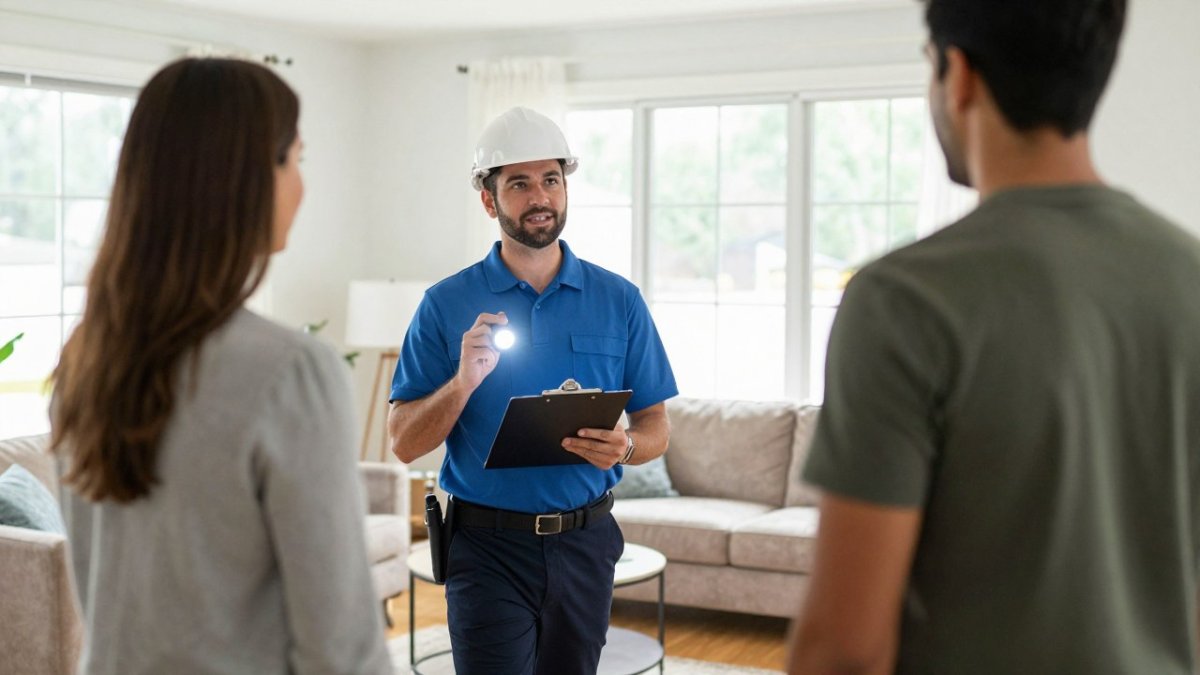
A thorough inspection usually takes a few hours, depending on size and condition. Attend if you can, walking the property with the inspector is the fastest way to understand the report. Ask questions as you go, especially about safety issues or large repairs.
After the inspection
You receive a report with photographs and plain-language observations, including access limitations. Read it before your option period ends, flag items to negotiate, and follow up on anything unclear. The report describes what was observable on the day of the visit; it does not predict future failures or confirm hidden conditions.
Watch out: booking too late in the option period leaves no room to review the report or renegotiate, so treat the inspection date as deadline-driven, not convenience-driven.
Ready to schedule? Book your FalconPoint inspection online, or call to talk through the scope before you commit.
Schedule a FalconPoint Inspections LLC inspection to understand the observable condition of your Lakewood property before you buy, sell, or rent. The team provides clear reports and documents every access limitation, so you know exactly what was checked.
Frequently Asked Questions
How long does a home inspection take?
Most residential home inspections take roughly two to four hours, depending on the size, age, and condition of the property. Larger homes, older properties, and homes with additional structures such as detached garages or outbuildings usually take longer. Townhomes and condos can be quicker because some components are shared. Ask your inspector for an estimated time when you book, and plan to be present for the walkthrough so you can ask questions while the findings are being observed.
What does a home inspection include?
A standard home inspection is a visual, non-invasive assessment of the observable condition of the property. It typically covers the roof, exterior, foundation, structure, electrical system, plumbing, heating and cooling systems, and interior components such as doors, windows, and floors. Inspectors document access limitations where areas were blocked or unsafe to reach. The inspection is not a code compliance check or a guarantee that no problems exist, so ask your inspector to clarify the scope before booking.
How do I choose a good home inspector?
Look for an inspector who is independent, carries professional liability (errors and omissions) and general liability insurance, and can explain how they document findings. Ask whether they recommend qualified contractors rather than performing repairs themselves, and request a sample report to confirm it is written in plain language with property-specific photographs. Compare the inspection scope, not just the price, and avoid any inspector who pressures you toward a particular outcome.
